
Managed inventory is becoming a vital strategy for businesses aiming to enhance efficiency. According to John Doe, a leading expert in supply chain management, "Managed inventory is not just about stock control; it's about proactive decision-making." This highlights the importance of being ahead in inventory management.
With managed inventory, companies can optimize their stock levels. Accuracy in demand forecasting aids businesses in maintaining the right amount of products. However, implementing this system is not without challenges. Organizations may struggle with data integration and forecasting accuracy. These hurdles push firms to rethink their strategies continually.
Moreover, managed inventory requires a cultural shift within organizations. Teams must embrace technology and adapt to new processes. This transition can be daunting. Yet, the benefits of streamlined operations and reduced stockouts can significantly outweigh the initial discomfort. A thoughtful approach is key to realizing the full potential of managed inventory.

Managed inventory refers to a systematic approach to inventory management. It focuses on optimizing stock levels to meet customer demand while minimizing costs. This method aims to reduce overstock or stockouts. Effective managed inventory integrates several key components.
The first component is demand forecasting. Accurate predictions help determine what products will be needed. Using historical data is beneficial but not perfect. Trends can change unexpectedly. Relying solely on past data may lead to issues.
Another critical aspect is inventory tracking. Real-time data is essential for understanding stock levels. Barcodes and RFID technology can enhance visibility. However, maintaining this technology may require extra resources and training. Finally, supplier collaboration is necessary. Good relationships can improve lead times and reduce costs. Communication often falls short. Addressing these challenges can strengthen the managed inventory process and improve overall efficiency.
| Component | Description | Benefits | Challenges |
|---|---|---|---|
| Inventory Management System | Software used to track inventory levels, orders, sales, and deliveries. | Increased accuracy and efficiency in tracking inventory. | Initial setup costs and potential for software errors. |
| Supplier Integration | Collaboration with suppliers for real-time inventory updates. | Enhanced inventory turnover and reduced stockouts. | Dependence on supplier reliability and data sharing capabilities. |
| Demand Forecasting | Analyzing data to predict customer demand for products. | Improved inventory levels and customer satisfaction. | Forecasting errors due to market volatility. |
| Inventory Audits | Regular checks to verify actual inventory against records. | Identifies discrepancies and streamlines stock management. | Time-consuming and can disrupt operations. |
| Reporting and Analytics | Using data for strategic decisions regarding inventory levels and management. | Informed decision-making and trend analysis. | Requires data literacy and analytical tools. |
Managed inventory systems offer various benefits that can transform supply chain operations. Companies that adopt these systems often see significant improvements in efficiency. According to a report by the Council of Supply Chain Management Professionals, businesses can reduce their inventory carrying costs by up to 25% with managed inventory practices. This reduction in costs allows firms to allocate resources to other areas.
Another advantage is enhanced order fulfillment. A survey by the National Retail Federation showed that 64% of retailers using managed inventory reported improved order accuracy. When businesses maintain optimal stock levels, they minimize stockouts and overstock situations. However, not all implementations succeed. Companies may face challenges, such as inaccurate forecasting or poor supplier relationships, which can hinder the anticipated benefits.
Real-time data monitoring is crucial in managed inventory. It allows businesses to respond quickly to market changes. Yet, firms must invest in robust technology and data analytics to harness this potential. An estimated 45% of organizations struggle with data integration issues. Ensuring the accuracy of data is vital for deriving actionable insights. When data sources are misaligned, the entire system can fall short of expectations.
Managed inventory involves a proactive approach to supply chain management. It utilizes various processes and technologies to optimize stock levels. This method can significantly reduce excess inventory. A recent report from the Supply Chain Management Review indicated that companies practicing managed inventory can see a 25% reduction in carrying costs.
Key processes include data analysis, predictive modeling, and automated ordering. Data analytics helps in understanding demand patterns. By leveraging technologies like AI and machine learning, businesses can forecast needs more accurately. This leads to timely replenishment, which minimizes stockouts and overstock situations. Research from Gartner shows that companies with advanced data analytics capabilities are 50% more likely to outperform their competitors in inventory efficiency.
Despite the benefits, challenges remain. Misinterpretation of data can result in poor inventory decisions. Additionally, inadequate training for staff on new technologies can hinder effectiveness. Companies must reconsider their strategies and solutions to address these limitations. Effective managed inventory isn't just about technology; it requires a cultural shift towards continuous learning and adaptation.
Managed inventory can streamline supply chains but comes with its own set of challenges. Companies must maintain accurate stock levels to meet customer demand. If stock levels are not monitored, overstock or stockouts can occur. This directly impacts sales and customer satisfaction. In managed inventory, communication among teams is crucial. Misalignment can lead to errors in inventory data.
Additionally, technology plays a significant role in managed inventory systems. Automated tools help track inventory in real-time. Yet, these systems can fail without proper integration. When data silos exist, teams may not have the same information. This disconnect can cause delays in decision-making. Businesses often find it hard to adapt to new systems. The learning curve can slow operations initially.
Finally, external factors like market fluctuations can influence inventory management. A sudden increase in demand can leave inventory insufficient. Conversely, a drop in demand may lead to excess stock. Balancing these factors requires ongoing assessment and flexibility. It's important for businesses to regularly review their inventory strategies and adjust accordingly.
This bar chart illustrates the various challenges associated with managed inventory. Each category represents a common issue faced in inventory management, with stockouts being the highest challenge identified at 30%, followed by excess inventory and carrying costs. This visual representation highlights the importance of effective inventory strategies to mitigate these problems.
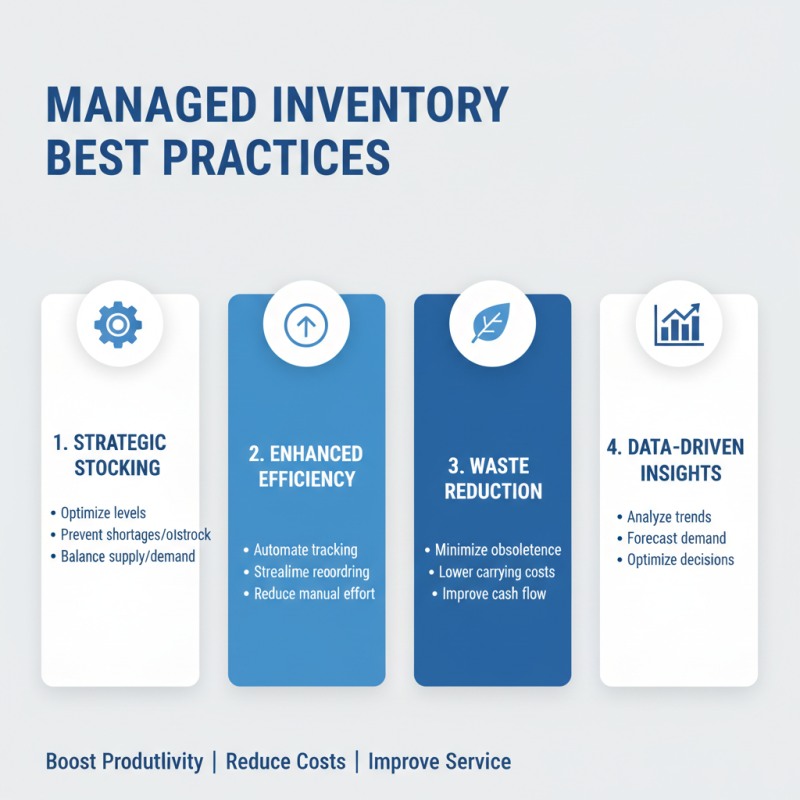
Managed inventory involves a strategic approach to stock management, enabling businesses to maintain optimal levels of inventory. Implementing it effectively can enhance efficiency and reduce waste. Here are some best practices to consider.
Regularly analyze your inventory data. This step helps identify trends and seasonal fluctuations. Utilize tools that provide insights into inventory levels and turnover rates. Make sure to adjust orders based on this information.
Stay in close communication with suppliers. Building strong relationships can lead to better response times and flexibility. If a supplier fails to deliver on time, it can impact your inventory levels. Always have contingency plans in place.
**Tip:** Consider using a just-in-time inventory system. This can minimize storage costs but requires precise forecasting. Monitor lead times closely to avoid stockouts.
**Tip:** Train your team regularly on inventory management practices. A well-informed team can spot issues early. Remember that mistakes happen; learning from them is vital for improvement.