How to Optimize High Speed Rail Cargo for Global Buyers?
High Speed Rail Cargo has become a crucial element in the global supply chain. As demand for rapid delivery increases, efficient cargo optimization is essential. Many companies struggle with managing logistics effectively. Understanding how to leverage the strengths of high-speed rail can drive improvements.
These rail systems offer speed and reliability that traditional transport methods can't match. However, challenges remain in maximizing their potential. Communication with global buyers is vital in establishing streamlined processes. Efficient tracking mechanisms are needed to ensure timely deliveries. Moreover, cost management plays a significant role in optimizing operations.
Investing in technology can provide valuable insights. Yet, not all companies have the expertise required to implement these systems effectively. There are frequent oversights in packaging and loading that can lead to inefficiencies. Businesses must often reassess their strategies to improve outcomes. Ultimately, focusing on these factors can enhance the High Speed Rail Cargo experience for global buyers.
Benefits of High-Speed Rail Cargo for Global Trade Efficiency
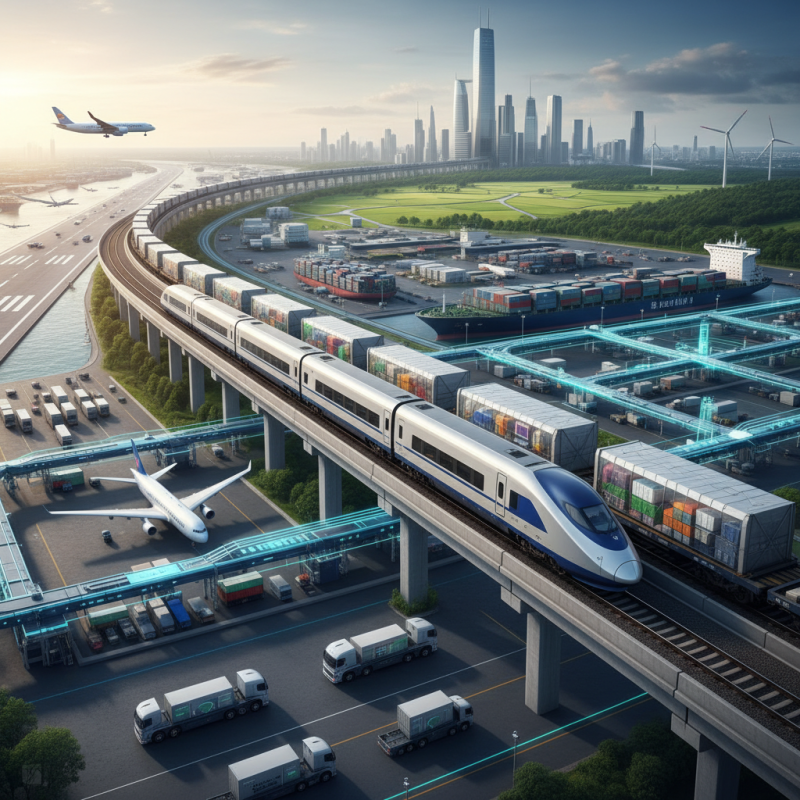
High-speed rail cargo offers significant benefits for global trade efficiency.
With reduced transit times, it enables quicker delivery of goods across vast distances.
For instance, shipping products from Asia to Europe via high-speed trains can take just a fraction of the time compared to traditional methods.
This efficiency can lead to fresher goods and less inventory waste, ultimately resulting in cost savings.
However, optimizing high-speed rail cargo requires attention to details.
Proper planning is necessary to ensure timely departures and arrivals.
Additionally, loading practices must be assessed. Mismanagement in this area can lead to delays and increased costs.
Shippers must be mindful of cargo types that can be efficiently transported by rail. Not every product is suitable for high-speed methods, creating potential challenges.
Global buyers also need to consider infrastructure availability.
Not all regions have access to high-speed rail. This limitation can impact delivery capabilities.
Closer examination of routes and rail networks is essential to determine feasibility.
While the benefits are clear, the implementation demands careful reflection.
The success of optimizing high-speed rail cargo relies on balancing efficiency with practicality.
Key Markets and Routes for High-Speed Rail Cargo Expansion
High-speed rail cargo is gaining traction worldwide. Key markets for expansion include Europe, Asia, and North America. These regions show significant demand for efficient logistics solutions. In Europe, the growing e-commerce market drives the need for speedy deliveries. Rail networks, such as routes connecting major cities, are essential to meet this demand.
In Asia, countries like China and Japan lead in high-speed rail infrastructure. The integration of cargo services with passenger trains can enhance efficiency. However, challenges exist. Environmental concerns and regulatory hurdles could impede growth. Moreover, competition from other transport modes persists. Efficiency improvements and strategic alliances may alleviate these issues.
North America presents unique opportunities for high-speed rail cargo. Urban congestion pushes businesses to seek faster shipping options. Proposed projects in regions like California could redefine logistics. Yet, investment in infrastructure remains a significant barrier. Assessing the feasibility of routes is crucial. These considerations require careful planning and stakeholder engagement for successful outcomes.
How to Optimize High Speed Rail Cargo for Global Buyers? - Key Markets and Routes for High-Speed Rail Cargo Expansion
| Route |
Origin Country |
Destination Country |
Cargo Volume (Tons/Year) |
Estimated Delivery Time (Hours) |
Key Industry |
| Shanghai to Beijing |
China |
China |
1,200,000 |
4.5 |
Electronics |
| Paris to Lyon |
France |
France |
900,000 |
2.0 |
Automotive Parts |
| Tokyo to Osaka |
Japan |
Japan |
950,000 |
3.0 |
Machinery |
| Barcelona to Madrid |
Spain |
Spain |
800,000 |
2.5 |
Textiles |
| Milan to Rome |
Italy |
Italy |
730,000 |
3.5 |
Food Products |
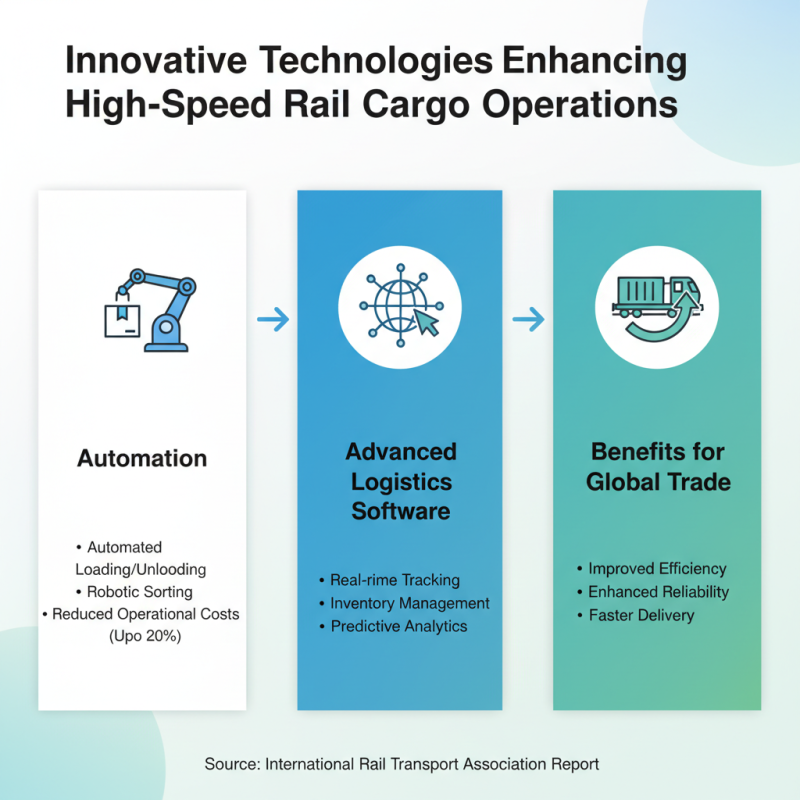
Innovative Technologies Enhancing High-Speed Rail Cargo Operations
High-speed rail cargo operations are evolving with innovative technologies. Automation is playing a key role. Advanced logistics software enhances tracking and management. According to a recent report from the International Rail Transport Association, automation can reduce operational costs by up to 20%. This results in improved efficiency and reliability for global buyers.
Telematics systems are revolutionizing cargo tracking. They provide real-time data on the location and condition of goods. This is crucial for perishable items, ensuring they arrive fresh. Companies using telematics report a 15% decrease in spoilage rates. However, integrating these technologies poses challenges. Not all rail networks are equipped for such advanced systems.
Data analytics is another game-changer. It helps in predicting demand and optimizing cargo loads. A study from the World Bank shows that improved data analytics can increase load efficiency by 25%. Yet, many rail operators struggle with data silos, hindering progress. This suggests a need for a more unified approach across the industry. As innovations continue, we must reflect on the implementation hurdles to fully realize their potential.
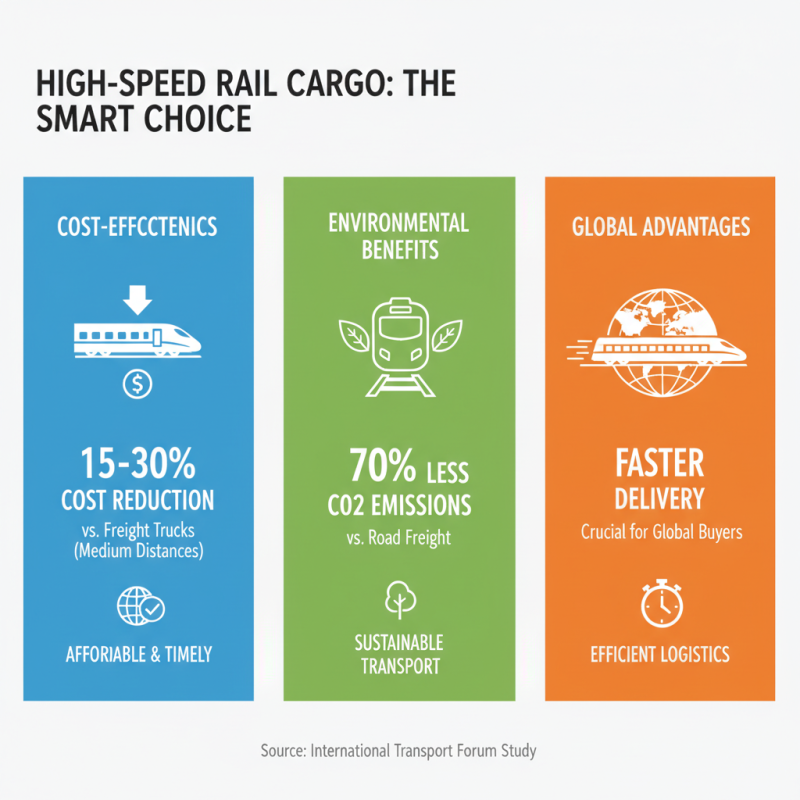
Cost-Effectiveness of High-Speed Rail Cargo Compared to Other Freight Options
High-speed rail cargo offers significant cost-effectiveness compared to traditional freight options. According to a recent study by the International Transport Forum, high-speed rail can reduce logistics costs by 15-30% compared to freight trucks, especially over medium distances. This is crucial for global buyers seeking affordable and timely shipping solutions. The environmental benefits also stand out, with high-speed trains emitting 70% less CO2 than road freight.
However, there are challenges to consider. The infrastructure for high-speed rail cargo is not universally available, limiting its reach. Additionally, capacity issues can arise during peak times, affecting shipping schedules. Buyers must navigate these complexities while also weighing the advantages.
Moreover, while high-speed rail may provide quicker transit times, its scalability remains a concern. Reports indicate fluctuating demand patterns that can lead to underutilization of capacity. Balancing efficiency with the necessity of reliable service is vital for global supply chains. High-speed rail can indeed optimize cargo solutions, but continuous assessment of routes and capacity is essential for sustained cost-effectiveness.
Sustainability Impact of High-Speed Rail Cargo on Global Logistics
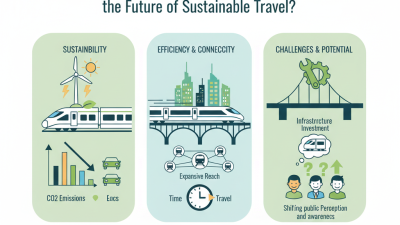
High-speed rail cargo presents a significant opportunity for enhancing global logistics sustainability. According to a report from the International Union of Railways, freight trains emit 75% less CO2 compared to road transport per ton-kilometer. This statistic highlights the potential for reducing carbon footprints when shifting cargo transportation modes. Efficient rail networks can also decrease congestion on highways, leading to fewer traffic jams and lower emissions from idling vehicles.
However, the transition to high-speed rail cargo isn’t without challenges. Issues like initial infrastructure costs and technological compatibility arise. Many regions lack the necessary rail systems or face outdated tracks. Adapting to high-speed rail requires investment and planning but, in the long term, can yield substantial environmental benefits. The World Economic Forum reported that logistics play a crucial role in global GDP—optimizing these systems through greener alternatives is vital.
Moreover, the energy consumption of rail systems must be monitored. While rail transport is generally more eco-friendly, it’s essential to consider the energy sources that power these trains. If powered by fossil fuels, the sustainability advantages diminish. Stakeholders should prioritize renewable energy to make a real impact. Ultimately, the balance between efficiency, cost, and environmental responsibility needs continuous reevaluation to leverage high-speed rail cargo effectively.