
How to Choose the Right Bulk Transport Service?
Choosing the right Bulk Transport service begins with the material, not the vehicle. Dry cement, grain, aggregates, and liquid chemicals require different equipment, controls, and loading routines. A tanker may protect a liquid cargo, while a covered tipper may better protect dusty materials. Small details matter. Moisture can harden powder inside a silo. Poor valve cleaning can create contamination concerns. Loading time also affects the final cost.
The American Trucking Associations’ American Trucking Trends 2024 report states that trucks carried 72.6% of domestic freight tonnage in the United States during 2022. This figure shows why carrier capability, fleet availability, and route planning deserve close attention. The World Bank’s Logistics Performance Index 2023 also highlights reliability, tracking, and delivery predictability as core logistics indicators. A low price is useful only when the load arrives safely and on schedule. That sounds obvious. It is often ignored.
Transport geography expert Jean-Paul Rodrigue writes, “The main purpose of transportation is to overcome space,” in The Geography of Transport Systems. For Bulk Transport, overcoming space means more than covering distance. It means matching payload capacity, road access, unloading equipment, cleaning standards, insurance, and real-time visibility. Ask for evidence of similar cargo experience. Review delivery records, response times, and contingency plans. Inspect the practical details, including hose condition, tarp security, weighbridge procedures, and driver communication. Some assumptions will fail during storms, harvest peaks, or unexpected site delays. A strong decision process allows for those imperfections and tests the service before committing to long-term volumes.
Define Your Bulk Transport Requirements and Shipping Specifications
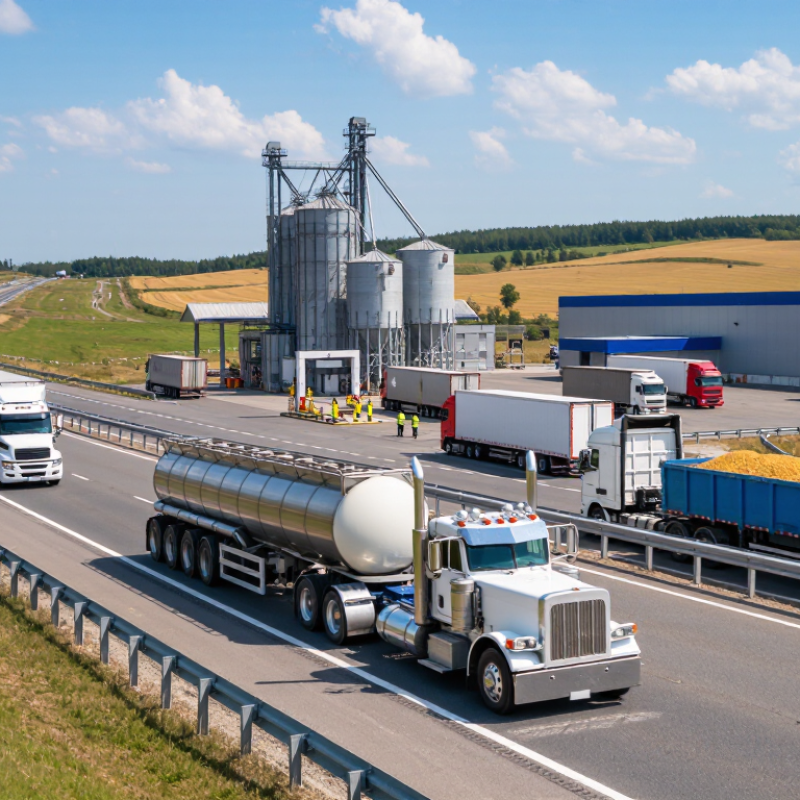
Before choosing a bulk transport service, define the material precisely. Record its name, physical form, bulk density, particle size, moisture range, temperature, and flow behavior. A powder that bridges inside a hopper needs different equipment from dry granules. Include the expected quantity, shipment frequency, loading method, unloading location, and delivery window. Small details matter.
UNCTAD’s Review of Maritime Transport 2024 reports more than 12 billion tonnes of seaborne trade in 2023. That scale does not make every route suitable. Compare road, rail, coastal, and ocean options against distance, transfer points, storage capacity, and weather exposure. The World Bank’s Logistics Performance Index 2023 highlights timeliness, tracking, and shipment quality as key logistics measures. Request proof of these capabilities, not broad promises.
Your shipping specification should state acceptable contamination limits, packaging or liner needs, weighing procedures, seal controls, and inspection points. For moisture-sensitive bulk cargo, define sampling frequency and maximum moisture content before loading. Applicable safety codes may also require cargo-specific declarations and handling controls. A common planning error is treating “bulk” as one category. It is not. A clean spreadsheet can still miss dust, caking, or difficult discharge angles. Leave room for adjustment after a trial shipment. Perfect assumptions rarely survive the first transfer.
How to Choose the Right Bulk Transport Service? - Define Your Bulk Transport Requirements and Shipping Specifications
| Transport Service | Best-Suited Cargo | Typical Load Capacity | Common Shipment Form | Loading and Unloading Requirements | Typical Transit Profile | Key Specification to Confirm | Main Advantages | Primary Limitations |
|---|---|---|---|---|---|---|---|---|
| Dry Bulk Truck | Grain, flour, cement, mineral powders, plastic pellets, and other free-flowing dry materials | Approximately 20–30 metric tonnes per vehicle, subject to legal axle limits and material density | Loose, non-packaged cargo in a sealed or covered trailer | Pneumatic discharge, gravity discharge, tipping equipment, or receiving hopper; dust-control provisions may be required | Flexible road delivery for short- and medium-distance routes; usually suitable for direct site-to-site shipments | Bulk density, moisture sensitivity, discharge pressure, trailer volume, contamination controls, and maximum payload | Door-to-door flexibility, frequent departures, and access to locations without rail or port infrastructure | Higher cost per tonne over long distances and payload restrictions caused by road regulations |
| Liquid Bulk Tanker | Food-grade liquids, chemicals, fuels, oils, and other pumpable products | Approximately 20–35 cubic metres or about 18–30 metric tonnes, depending on density and tank limits | Liquid cargo carried in a dedicated or appropriately cleaned tank | Pump, hose, compatible couplings, grounding, spill protection, and safe connection procedures | Direct road delivery with scheduled loading and unloading windows | Product compatibility, viscosity, flash point, temperature control, tank certification, cleaning standard, and regulatory classification | Efficient handling of pumpable cargo and reduced packaging requirements | Strict safety controls; incompatible products may require dedicated equipment or validated cleaning |
| Intermodal Bulk Container | Dry powders, granules, liquids, and products requiring transfers between road, rail, and sea | Commonly 20–30 metric tonnes, depending on container type, tare weight, and route restrictions | Sealed container, liner, flexitank, or specialized bulk container | Container chassis, compatible loading system, secure seals, and unloading equipment at the destination | Well-suited to long-distance and multimodal movements; schedules depend on terminal connections | Container dimensions, gross mass, liner compatibility, stacking requirements, terminal handling, and transfer points | Reduced cargo handling, improved security, and efficient combination of transport modes | Requires suitable terminal and site equipment; schedule changes can occur during mode transfers |
| Rail Bulk Freight | Coal, aggregates, grain, fertilizers, minerals, cement, and other high-volume commodities | Often 1,000–5,000+ metric tonnes per train, depending on train length, wagon type, and route capacity | Open hopper, covered hopper, tank wagon, or specialized rail wagon | Rail siding, loading conveyor, silo, rotary dumper, bottom discharge, or unloading pit may be required | Most effective for regular, high-volume, long-distance movements with planned schedules | Origin and destination rail access, wagon type, train length, loading rate, unloading rate, and storage capacity | High capacity and generally lower energy use per tonne-kilometre than road transport | Limited route flexibility and possible delays caused by network congestion or terminal availability |
| Bulk Vessel Transport | Large volumes of grains, ores, coal, aggregates, fertilizers, liquids, and other seaborne commodities | Approximately 5,000 to more than 200,000 metric tonnes, depending on vessel class and port limitations | Loose dry bulk in holds or liquid bulk in cargo tanks | Port berth, conveyor, grab, loading arm, pump, draft clearance, storage area, and approved handling equipment | Best for international or coastal movements where shipment volume justifies port handling | Port draft, cargo compatibility, demurrage terms, loading rate, discharge rate, laycan window, and port storage capacity | Very low transportation cost per tonne for large-volume, long-distance shipments | Longer planning cycles, port dependency, weather exposure, and additional inland transport requirements |
| Pneumatic Pipeline Transfer | Dry powders, cement, ash, pellets, and other compatible materials that can be conveyed by air | Continuous flow rates commonly range from several tonnes per hour to hundreds of tonnes per hour, depending on system design | Continuous or batch transfer through enclosed pipelines | Blower or compressor, feed hopper, filters, receiving silo, pressure controls, and dust collection system | Highly efficient for fixed, repetitive routes between connected facilities | Particle size, bulk density, air-to-solids ratio, pipeline length, pressure drop, filtration, and product degradation risk | Enclosed handling, low packaging demand, consistent flow, and reduced exposure to weather | High initial infrastructure cost and very limited flexibility once the route is installed |
Planning note: Capacity and transit characteristics are typical industry planning ranges. Final specifications depend on cargo density, applicable weight regulations, route conditions, equipment availability, terminal capability, and local safety requirements.
Related Posts
-
2026 Best Bulk Transport Companies for Global Buyers
-
What Is Bulk Transport and How Does It Work?
-

The Best 5 High Speed Goods Train Innovations You Should Know?
-
Top 10 Bulk Transport Companies in China What You Need to Know?
-
How to Source High Speed Goods Train for Global Trade?
-
Top Bulk Transport Solutions for Global Procurement Needs?