7 Hydrogen Freight Train Buying Tips for Global Buyers

A Hydrogen Freight Train can help freight operators explore lower-emission rail service, but a purchase depends on the route, workload, and hydrogen supply. For global buyers, a promising brochure is only a starting point. The locomotive must match gradients, axle loads, train length, operating hours, and required range. A depot’s refueling layout matters too. Small details matter. An access road, storage capacity, or maintenance bay can shape daily performance. No single configuration suits every network.

This guide presents seven practical buying tips, from verifying performance data to assessing supplier support and lifecycle costs. Ask for evidence from comparable operating conditions, not just headline figures. Review warranty coverage, spare-parts availability, maintenance training, delivery schedules, and the assumptions behind fuel-cost estimates. Plans change. A route may expand, or hydrogen delivery may arrive later than expected. Even a detailed specification can leave unanswered questions, so buyers should record risks and clarify responsibilities before signing. The best choice is not automatically the newest or most powerful train. It is the one that fits the service plan and can be supported reliably over time. Some answers may remain uncertain. That is worth acknowledging.
7 Hydrogen Freight Train Buying Tips for Global Buyers

Define Freight Duty: Match Tractive Effort, Payload, and Route Grade

Before comparing hydrogen freight trains, define the work they must perform. Record the heaviest trailing load, expected speed, stop frequency, and daily distance. Include both loaded and empty movements; they can create very different demands. Small details matter.

Tractive effort must cover starting resistance and keep the train moving on the route’s steepest sections. A 1% uphill grade adds roughly 98 newtons of gravitational force per metric tonne, before rolling resistance, curves, or acceleration are considered. Check both starting effort and continuous power. A locomotive may pull a heavy consist briefly but struggle to sustain speed uphill. Ask for performance data under the operating conditions you expect.

Payload is not just a maximum tonnage figure. Compare usable freight capacity with the locomotive’s own mass, braking needs, and any limits imposed by bridges or track. Then model actual gradients, curve radii, speed restrictions, and weather. A tidy spreadsheet can still miss a short, steep climb or frequent yard starts. It happens. Request a route-based simulation using your consist and timetable, and review its assumptions with an experienced rail engineer before choosing equipment.

Size Onboard Energy: Hydrogen Provides 33.3 kWh/kg on an LHV Basis

For global buyers, 33.3 kWh/kg is hydrogen’s lower heating value (LHV): the chemical energy in one kilogram, not the electricity delivered to the wheels. At an illustrative 50% net conversion efficiency, that kilogram provides about 16.7 kWh of electrical energy. Real performance varies with system design, operating load, and auxiliary equipment. Keep the distinction clear.

Estimate route energy before selecting tank capacity. Train mass, gradients, stop frequency, speed, heating, and cooling can all change consumption. For example, a route needing 600 kWh of electrical energy would require roughly 36 kg of hydrogen at the illustrative efficiency above, before adding operating reserves. This is a planning estimate, not a specification. Check the usable hydrogen mass, since stored capacity and fuel available for operation are not always identical.

Then test the estimate against the duty cycle. A long climb, a cold morning, or an unexpected delay can raise demand. Tank packaging also affects payload and available space, while refueling intervals shape daily operations. Ask suppliers for measured consumption data under comparable conditions, and examine the assumptions behind it. Models miss things. A practical trial can reveal gaps that a tidy spreadsheet cannot.

7 Hydrogen Freight Train Buying Tips for Global Buyers – Size Onboard Energy: Hydrogen Provides 33.3 kWh/kg on an LHV Basis
Buying Tip Dimension or Planning Metric Reference Value or Calculation What Buyers Should Verify
1. Size energy by hydrogen mass Hydrogen lower heating value (LHV) Approximately 33.3 kWh/kg. For example, 100 kg contains about 3,330 kWh of chemical energy on an LHV basis. Confirm that the train’s energy figures use LHV consistently and distinguish chemical energy from usable electrical energy.
2. Convert fuel energy into usable electricity Fuel-cell system efficiency assumption At an illustrative 50% net electrical efficiency, 100 kg of hydrogen would provide about 1,665 kWh of electricity before any further train-level adjustments. Request efficiency maps across operating loads and clarify whether auxiliaries, power conversion, and energy-management losses are included.
3. Check storage volume as well as fuel mass Approximate compressed-hydrogen density at 15°C About 23 kg/m³ at 350 bar and 39 kg/m³ at 700 bar. These correspond to roughly 0.77 and 1.30 kWh/L of hydrogen LHV, respectively. Treat these as approximate reference values: actual density depends on pressure, temperature, and real-gas behavior. Compare complete tank-system volume, mass, and packaging constraints.
4. Match onboard fuel to the route duty cycle Hydrogen required for a specified net electrical-energy demand For 1,000 kWh of net electricity at an assumed 50% net efficiency: 1,000 ÷ (33.3 × 0.50) ≈ 60 kg of hydrogen, before reserve and operating adjustments. Use route-specific traction, gradient, speed, stop, weather, and auxiliary-load data. Include reserve policy and the required return-to-refuelling capability.
5. Specify usable fuel, not just nominal tank capacity Deliverable hydrogen mass and residual pressure Usable fuel is the hydrogen mass available within the system’s permitted pressure and temperature operating range; it can be less than the nominal stored mass. Ask for guaranteed usable kilograms, operating limits, reserve assumptions, and the method used to measure remaining fuel.
6. Size the refuelling interface for the timetable Average mass-flow requirement As a simple arithmetic example, supplying 100 kg in 30 minutes requires an average flow of 200 kg/h during that period. Confirm actual fill time under operating conditions, including pressure ramping, thermal limits, connection procedures, compressor capacity, and station availability.
7. Include safety and approval requirements in procurement Vehicle, tank, depot, and route-specific compliance Requirements depend on the jurisdictions and railway systems in which the train and refuelling facilities will operate. Define applicable rail approvals and pressure-vessel requirements, and verify leak detection, ventilation, isolation, emergency response, maintenance, and staff-training provisions.

Note: Energy and storage figures are rounded reference values. Efficiency and route-energy examples are planning illustrations, not guaranteed performance specifications.

Specify Fuel Quality: Check Hydrogen Supply Against ISO 14687

Hydrogen quality can affect fuel-cell performance, maintenance intervals, and train availability. ISO 14687 sets hydrogen fuel quality requirements, but the relevant grade depends on the application and the edition specified in the contract. Buyers should confirm both before comparing supplier offers. A vague promise of “fuel-cell-grade hydrogen” is not enough. Specify the required grade and applicable edition in the purchase documents.

Ask suppliers for a certificate of analysis that identifies the tested impurities and the measurement methods. Pay attention to moisture, oxygen, and other contaminants that may matter for the selected fuel-cell system. Limits vary by grade, so avoid relying on a generic specification sheet. Check that test results represent the hydrogen delivered, not only a sample taken at the production site. Small details matter.

Sampling needs clear rules. Agree on where samples are taken, how they are handled, and what happens if a delivery fails acceptance checks. Retain batch records and link them to delivery dates and train operating logs. This takes coordination. It is easy to overlook the connection between fuel records and maintenance data. Ask technical staff to review the acceptance process before signing; a tidy certificate may still leave practical questions unanswered.

Assess Refueling: Verify Station Design Against ISO 19880-1

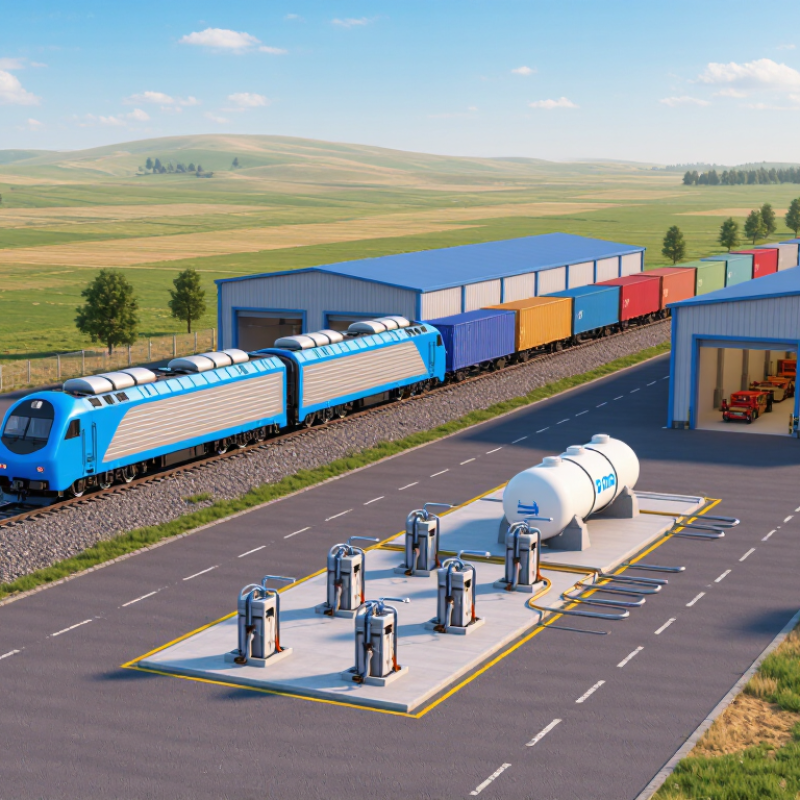
For a hydrogen freight train, the refueling station must match the vehicle’s pressure range, connection, and required fill rate. ISO 19880-1 sets general safety requirements for gaseous hydrogen fueling stations, but it is not a complete railway interface specification. Ask the supplier to map the proposed station design to the train’s tank data and operating profile. Small details matter.

Review the layout drawings, equipment specifications, and operating procedures against the standard’s relevant requirements. Check how storage, compression, cooling, dispensing, ventilation, and emergency shutdown are addressed. Confirm that the fueling connection and control system suit the train, including the expected hose reach and position alongside the track. A neat drawing can still hide a slow fill. Request evidence from design reviews and testing, not only a statement of compliance.

Also establish whether the station’s scope covers rail-specific risks and local railway requirements alongside ISO 19880-1. Ask how staff will isolate the dispenser, respond to a leak alarm, and manage access during refueling. Compare the proposed flow rate with the train’s turnaround schedule under realistic operating conditions. Test records may not reflect every site condition, so note assumptions about temperature, supply pressure, and simultaneous demand. That gap deserves discussion.

Compare Lifecycle Costs: Model Fuel, Range, Availability, and Maintenance

Model the full duty cycle, not a brochure range. Record route distance, payload, gradients, stops, and seasonal temperatures. Estimate hydrogen use per trip from operating data or a supervised trial, allowing for cold starts and idling. Small details matter. Compare delivered fuel prices across the train’s expected service life, and test how sensitive costs are to price changes.

Check whether fueling can fit the timetable at every required terminal. A train with sufficient range on paper may still lose hours if refueling capacity is limited or supply deliveries are irregular. Include backup arrangements, storage, and the cost of keeping enough fuel available during peak periods. That gap matters. Use realistic availability assumptions, including planned refueling and unexpected supply interruptions, rather than assuming every scheduled departure runs perfectly.

Maintenance estimates should cover routine inspections, specialist labor, parts, training, and potential component replacement. Ask suppliers for documented service intervals and comparable fleet data, then check what is included in each quote. Compare total cost per tonne-kilometre over a consistent study period, with financing and residual value stated separately. Some inputs will remain uncertain; show the range, and revisit it after operating trials. A tidy spreadsheet can still hide weak assumptions.