How to Optimize Bulk Transport for Efficiency and Cost Savings?
Optimizing bulk transport is crucial for businesses aiming to enhance efficiency and reduce costs. The dynamics of bulk transport involve many factors, including logistics, route planning, and cargo management. Improvements in these areas can yield significant savings and streamline operations.
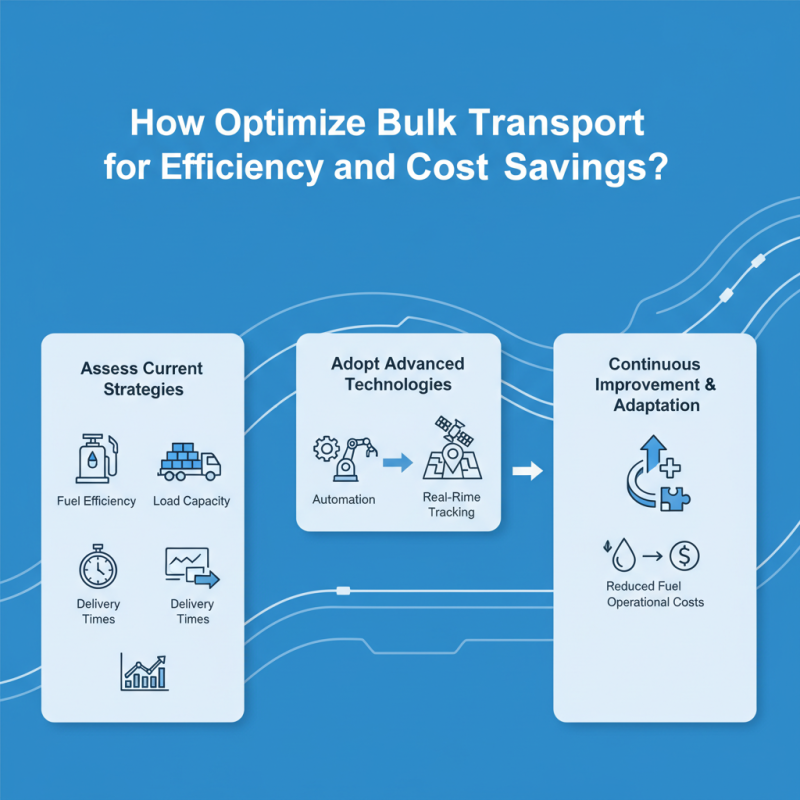
Businesses must assess their current bulk transport strategies. They should consider elements like fuel efficiency, load capacity, and delivery times. Regular evaluation helps identify weaknesses and opportunities. Relying on data analytics can support informed decisions for better resource allocation.
Adopting advanced technologies plays a pivotal role. Automation and real-time tracking can optimize transport routes. These innovations lead to reduced fuel consumption and lower operational costs. However, not all companies may be ready for such changes, highlighting the need for continuous improvement and adaptation.
Understanding Bulk Transport: Key Concepts and Challenges
Bulk transport is essential for
moving large quantities of goods. It can help industries save costs and improve
efficiency. However, understanding its key concepts
and challenges is vital for successful operations. There are various types
of bulk transport, including liquid,
dry, and gas.
Each type has unique requirements and limitations. For instance, dry bulk transport
often faces challenges related to moisture control
and cargo segregation.
Challenges in bulk transport include logistics coordination
and equipment utilization. Delays can occur due to weather
or equipment issues. This is a common reflection point for many operators. Often, routes
may need reevaluation. Optimizing transportation routes
can reduce costs but requires careful planning. Additionally, ensuring cargo safety
is crucial. Without proper handling, bulk materials can sustain damage, leading to financial loss.
To effectively manage bulk transport, data-driven decisions
are essential. Analyzing transport patterns and costs can highlight inefficiencies. Operators may realize
their scheduling needs adjustment. Collaboration among teams can enhance
overall performance. Engaging logistics professionals can provide needed insights into best practices.
Ultimately, a continuous improvement mindset
benefits the overall process. This leads to more effective and reliable bulk transport operations.
Identifying Cost Drivers in Bulk Transport Operations
Identifying cost drivers in bulk transport operations is crucial for maximizing efficiency. Fuel costs, labor expenses, and maintenance fees are the primary factors affecting overall spending. Organizations often overlook the impact of route planning. Inefficient routing can lead to increased fuel consumption. The choice of transport mode also affects costs significantly. Using data analytics can help companies assess these factors.
Moreover, vehicle maintenance is essential. Neglected maintenance can lead to breakdowns, causing delays and additional costs. In many cases, businesses underestimate the expenses tied to idle time during transport. This includes not just waiting at loading docks, but also delays due to unforeseen circumstances. Warehousing costs can also accrue if shipments are not managed properly.
Focusing on training for personnel can yield better results. Knowledgeable staff can handle logistics smoother and more cost-effectively. Integrating technology, like real-time tracking, can enhance communication. This leads to quicker decision-making and can reduce waste. Companies should continuously evaluate their practices. Reflecting on operational processes can unveil hidden cost-saving opportunities. Effective cost management is an ongoing journey, not a one-time task.
Strategies for Enhancing Efficiency in Bulk Transportation
In the bulk transportation sector, efficiency directly impacts costs and service quality. A recent report by the International Transport Forum highlights that optimizing load factors can reduce transportation costs by up to 30%. This emphasizes the need for effective load planning and vehicle utilization. Companies must analyze cargo volumes and shipping schedules frequently.
Implementing digital tools can streamline operations. A study by McKinsey shows that automated route optimization can decrease delivery times by 15%. Real-time data tracking is essential for dynamic decision-making. However, many organizations still rely on outdated methods. This gap highlights an area for improvement. Training staff on new technologies is also critical.
Investments in sustainable practices are becoming vital. A report from the World Economic Forum notes that eco-friendly transport options can lower overall emissions by approximately 25%. Yet, the upfront costs may deter some companies. Balancing the initial investment with long-term returns is key. Companies need to adapt their strategies to align with environmental goals while managing expenses.
How to Optimize Bulk Transport for Efficiency and Cost Savings? - Strategies for Enhancing Efficiency in Bulk Transportation
| Transport Method |
Fuel Efficiency (mpg) |
Cost per Ton-Mile ($) |
Time Efficiency (Days) |
Carbon Emissions (g CO2/ton-mile) |
| Rail Transport |
480 |
0.05 |
2 |
12 |
| Truck Transport |
150 |
0.15 |
1 |
130 |
| Barge Transport |
550 |
0.04 |
5 |
8 |
| Air Freight |
59 |
0.90 |
0.5 |
300 |
| Pipeline Transport |
N/A |
0.01 |
3 |
5 |
Technological Innovations Transforming Bulk Transport Practices
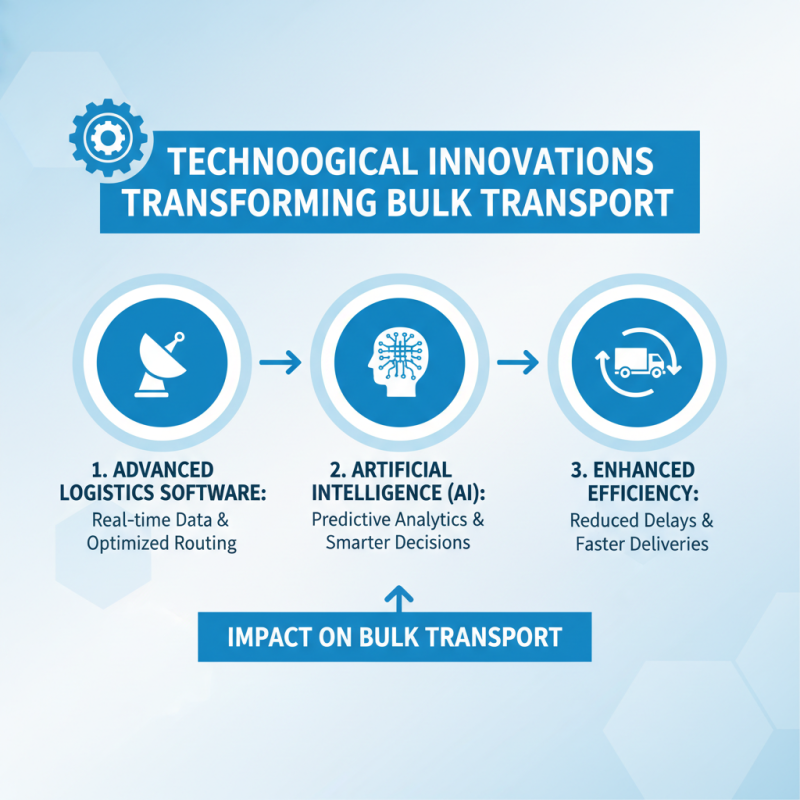
Technological innovations are reshaping the bulk transport industry. Advanced logistics software is enhancing efficiency in routing and scheduling. This software utilizes real-time data, reducing delays and optimizing delivery times. Integrating Artificial Intelligence (AI) allows for predictive analytics, improving decision-making processes.
Automation is also playing a crucial role. Automated vehicles and drones are beginning to emerge in bulk transport. These technologies can handle repetitive tasks, minimizing human error. Yet, reliance on automation raises questions about job security in the sector. Striking a balance between innovation and employment is essential.
Moreover, sustainability is a significant focus. Innovations in cargo loading and unloading systems are streamlining operations, reducing energy consumption. New materials, such as lightweight composites, are improving fuel efficiency. However, transitioning to greener practices can come with high initial costs. Companies need to ponder their commitment to long-term sustainability versus immediate financial constraints.
Best Practices for Sustainable and Cost-Effective Bulk Logistics
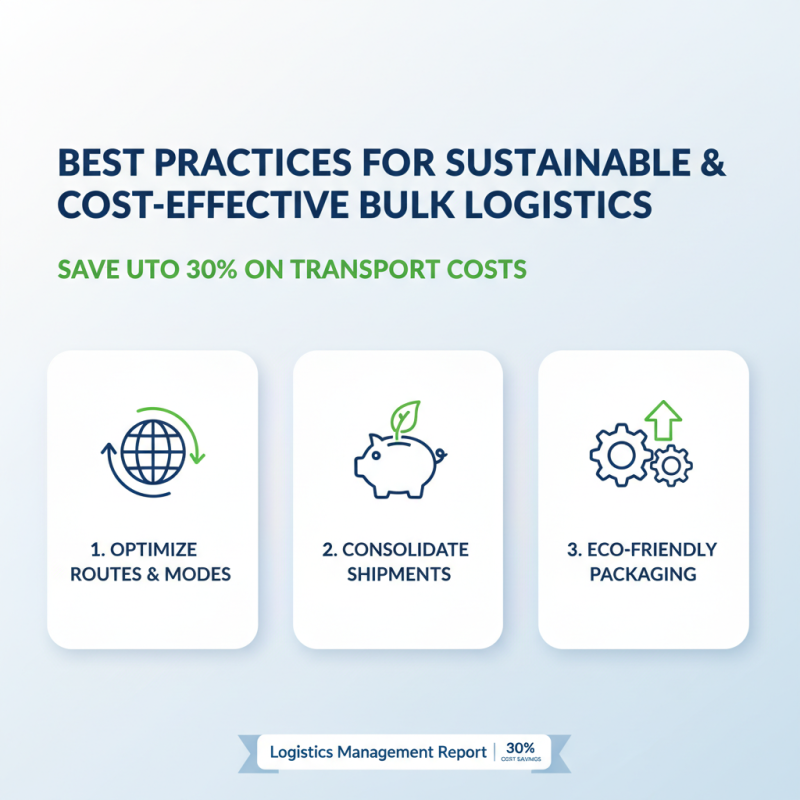
In an era where sustainability and cost-effectiveness are crucial, optimizing bulk logistics is a pressing concern. According to the Logistics Management Report, companies can save up to 30% on transport costs by streamlining their shipping processes. Focused strategies can lead to more efficient bulk transport without compromising environmental standards.
Investing in technology is vital. Advanced tracking systems improve visibility. These tools allow for real-time monitoring of shipments. Data analytics can identify delays and inefficiencies. Businesses that utilize these technologies often see a significant reduction in logistics costs, often around 20%, as noted in a study by the Council of Supply Chain Management Professionals.
**Tip**: Analyze your current route designs. Adjusting delivery schedules can maximize truckloads and reduce empty returns, increasing efficiency.
Furthermore, partnerships with green transport service providers can enhance sustainability. A study indicates that greener alternatives can lower carbon emissions by up to 25%. However, some companies hesitate to switch due to cost concerns. Despite this, the long-term savings often outweigh initial expenses.
**Tip**: Consider bulk purchasing agreements. They can significantly reduce unit costs and improve supplier relationships, fostering a more resilient logistics strategy.
This blend of technology and sustainable practices presents a path forward. While challenges remain, the potential for cost savings is substantial.