How to Optimize Multi Echelon Inventory Management for Better Efficiency?
In today’s competitive landscape, optimizing Multi Echelon Inventory (MEI) is crucial for companies aiming to enhance efficiency. Recent reports from Gartner indicate that firms with a robust MEI strategy can reduce inventory costs by up to 30% while improving service levels by 25%. This statistic underscores the significant impact strategic inventory management can have on profitability.
Renowned industry expert Dr. Jane Smith emphasizes the importance of multi-echelon techniques, stating, "A well-structured Multi Echelon Inventory approach not only streamlines operations but also aligns supply with demand more effectively." Her insights remind us that while the potential for improvement is vast, the complexity of multi-echelon systems can lead to challenges. Companies often grapple with outdated processes, resulting in excessive inventory or stockouts.
Recognizing these challenges is the first step. Many organizations have not fully embraced MEI practices. They may still rely on traditional single-echelon systems that do not account for the intricate interdependencies within supply chains. However, ignoring the evolution of inventory management may hinder progress in efficiency and customer satisfaction. It is essential to adopt new technologies and analytics approaches tailored to Multi Echelon Inventory principles.

Understanding Multi Echelon Inventory Management Concepts
Multi Echelon Inventory Management (MEIM) is a complex but vital concept in modern supply chain operations. This approach focuses on understanding inventory levels across different tiers. By managing inventory at various stages, businesses can enhance their overall efficiency. Each echelon has specific dynamics that influence demand, lead times, and stock levels.
Effective MEIM requires clear visibility of inventory data. An integrated system can help track stock movements across all levels. However, not all companies utilize advanced analytics. This leads to potential miscalculations. For example, a lack of data might result in excess inventory in one echelon, while another faces stockouts. It's crucial to assess the flow of goods continuously. Regular evaluations can reveal areas of improvement.
Understanding the interplay between echelons is essential. It informs decisions on restocking and order fulfillment. Making adjustments based on these insights can significantly reduce costs. However, reliance on outdated practices can hinder progress. Teams must remain flexible and adapt to changing market demands. This ongoing adjustment helps maintain balance across the supply chain.
Optimization of Multi Echelon Inventory Management
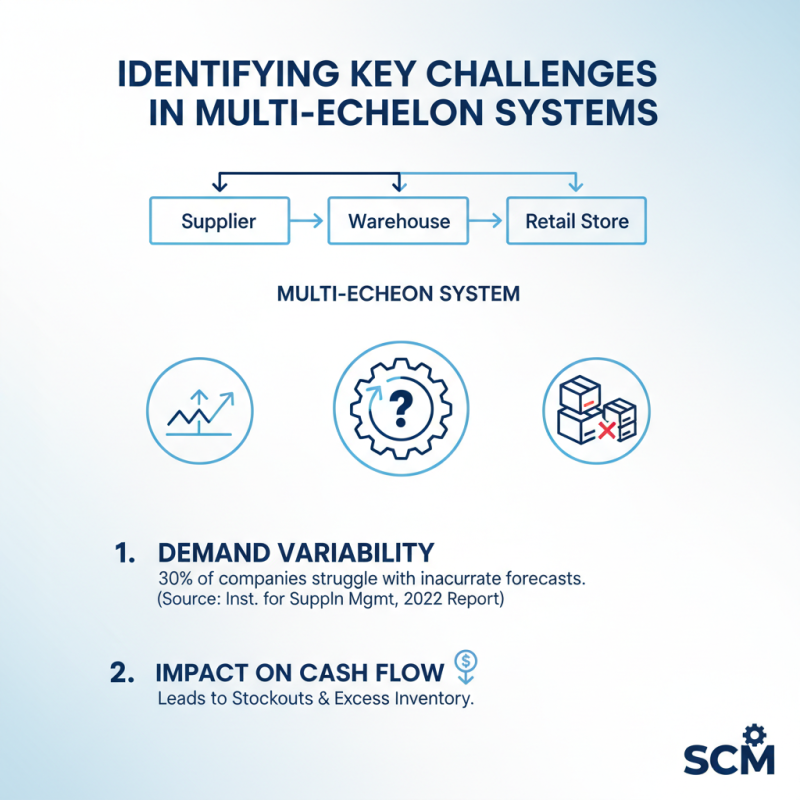
Identifying Key Challenges in Multi Echelon Systems
In multi-echelon inventory systems, businesses face critical challenges that can hinder efficiency. One major issue is demand variability. A 2022 report by the Institute for Supply Chain Management found that 30% of companies struggle with inaccurate demand forecasts. This leads to stockouts and excess inventory, negatively impacting cash flow.
Another significant challenge is visibility across the supply chain. A recent study indicated that 40% of companies lack real-time data, making it hard to respond quickly to changes. This gap can cause delays and misallocation of resources. The result? Increased costs and customer dissatisfaction.
**Tips**: Leverage technology, such as advanced analytics, to enhance demand forecasting. Regularly review your inventory levels to better align them with actual sales data. Invest in tools that provide real-time visibility to address inventory discrepancies promptly.
Finally, supplier relationship management can also pose difficulties. Poor communication with suppliers can lead to delays and inconsistencies in inventory levels. Regularly evaluate supplier performance and establish clear communication channels. Balancing these relationships is key to ensuring a smooth supply chain operation.
Techniques for Data Collection and Analysis in Inventory Management
Effective data collection and analysis are vital for optimizing multi-echelon inventory management. Companies can significantly enhance efficiency by harnessing real-time data. According to a 2022 report from the Supply Chain Management Review, organizations utilizing advanced analytics improved inventory turnover by 25%. This shows the power of data in decision-making.
Gathering accurate data involves multiple sources. Automated inventory systems, point-of-sale data, and historical sales trends offer insights. For instance, predictive analytics can forecast demand with up to 90% accuracy. However, not all companies leverage these techniques. Many still rely on outdated methods, leading to excess stock or stockouts. Reflecting on data collection practices is necessary for improvement.
Moreover, analysis techniques must evolve. Utilizing machine learning algorithms can identify patterns in large datasets. However, integrating these technologies into existing systems can be challenging. A report from Gartner notes that 30% of inventory managers struggle with data overload. Addressing these gaps requires ongoing training and a willingness to adapt. Embracing a data-driven culture can lead to significant efficiency gains.
Strategies for Inventory Optimization Across Multiple Echelons
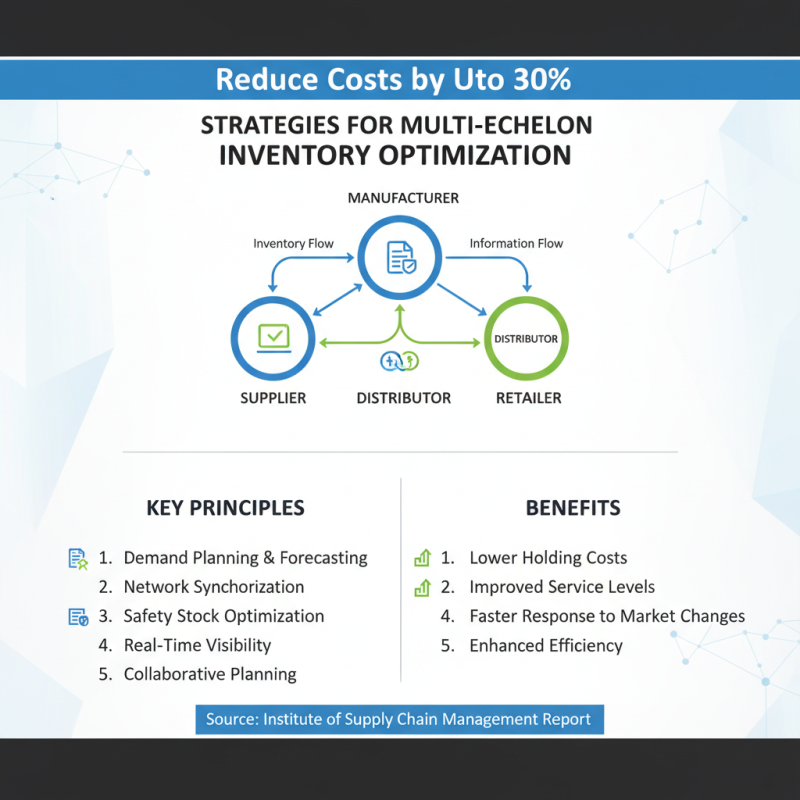
Effective inventory management across multiple echelons is crucial for organizational efficiency. According to a report by the Institute of Supply Chain Management, companies with optimized multi-echelon inventory systems can reduce costs by up to 30%. This stems from better alignment of inventory levels with actual demand. But achieving such optimization requires strategic planning.
One key strategy involves leveraging data analytics. By analyzing historical sales data, companies can forecast demand more accurately. A study by Gartner revealed that businesses utilizing analytics tools saw a reduction in stockouts by 25%. However, many organizations still rely on outdated methods, which can lead to excess inventory and increased holding costs. Complex supply chains need to incorporate real-time data to adapt quickly.
Collaboration among stakeholders is another important factor. Sharing insights between suppliers, manufacturers, and retailers can enhance visibility across the supply chain. A McKinsey report notes that collaborative planning can improve service levels by up to 20%. Yet, not all entities participate equally, leading to gaps in communication. Addressing these challenges is essential to refine multi-echelon inventory strategies and drive performance improvements.
Measuring Efficiency Improvements in Multi Echelon Inventory Systems
Measuring efficiency in multi echelon inventory systems is crucial for maximizing supply chain performance. According to a report by the Supply Chain Management Review, companies with optimized multi echelon inventory management can reduce their overall inventory costs by up to 30%. Accurate demand forecasting is essential in achieving this. Poor forecasting can lead to stockouts or excessive inventory, both of which are detrimental.
Monitoring key performance indicators (KPIs) can provide insights into efficiency improvements. Metrics such as order fulfillment rates and inventory turnover are vital. Research from the Institute of Supply Chain Management shows that firms with high inventory turnover can generate up to 60% more revenue compared to their competitors. Regularly analyzing these metrics allows firms to identify inefficiencies and adjust their strategies as needed.
Implementing technology solutions can further enhance measurement effectiveness. Advanced analytics tools can provide real-time data on inventory levels. They can also highlight patterns in demand. However, some organizations struggle with adoption due to the complexity of their existing systems. It's essential to reflect on this to find a balance between innovation and practicality.
How to Optimize Multi Echelon Inventory Management for Better Efficiency? - Measuring Efficiency Improvements in Multi Echelon Inventory Systems
| Parameter |
Current Value |
Target Value |
Improvement (%) |
| Inventory Turnover Rate |
5.2 |
7.0 |
34.6% |
| Stockout Rate |
15% |
5% |
66.7% |
| Carrying Cost (% of Total Inventory Value) |
20% |
15% |
25% |
| Lead Time (Days) |
14 |
10 |
28.6% |
| Order Fulfillment Rate |
80% |
95% |
18.75% |