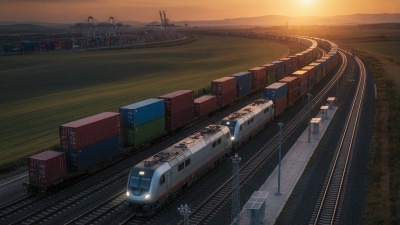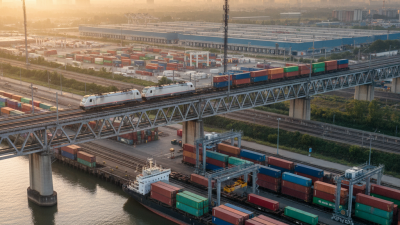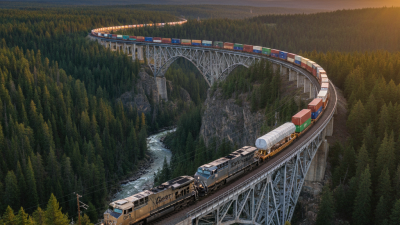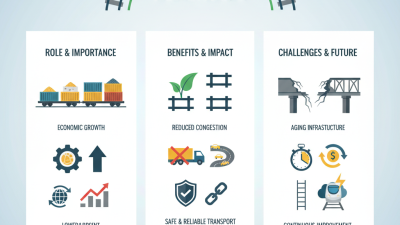
Global buyers are rethinking how goods move across continents. In 2026, Railway Freight remains important for long-distance supply chains, especially when road capacity is limited or fuel costs fluctuate. A container may leave a factory in Chongqing, cross several borders, and arrive in Rotterdam with fewer handling stages than expected. Yet rail is not automatically the best choice. Distance, terminal access, customs coordination, and delivery urgency still decide its value.
Dr. Jean-Paul Rodrigue, a recognized transport geography expert, observes, “Rail freight is most competitive when distance, volume, and network access align.” This principle helps buyers compare major freight types more carefully. Intermodal containers suit electronics, machinery, and packaged consumer goods. Bulk wagons carry grain, minerals, and construction materials. Specialized railcars support automobiles, chemicals, and temperature-sensitive products under approved safety controls. Project cargo can move turbines, transformers, and oversized industrial equipment, but planning becomes much stricter.
The practical details matter.
A missed terminal slot can erase a price advantage. A damaged pallet can expose weak loading procedures. Some routes remain less predictable than their marketing suggests, particularly during border changes, winter disruptions, or infrastructure maintenance. Buyers should therefore examine wagon availability, tracking quality, insurance terms, handling records, and final-mile arrangements. No single freight type fits every market. That is the uncomfortable part. Reliable sourcing requires evidence from carriers, forwarders, and terminal operators, not attractive rate tables alone. This guide compares the leading Railway Freight categories for global buyers and highlights where each option performs well, where it struggles, and what careful procurement teams should verify before booking.
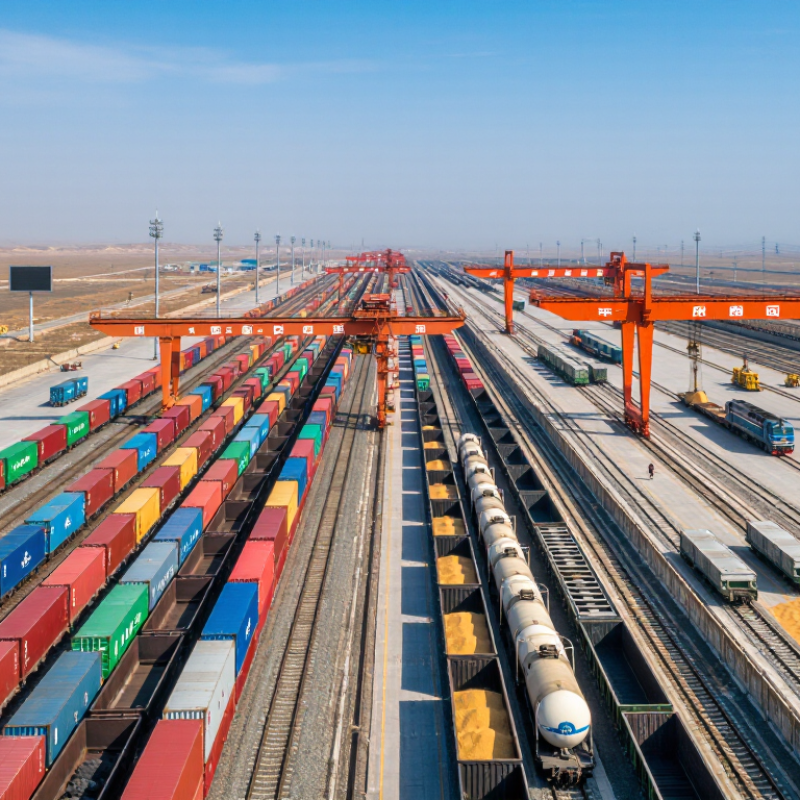
2026 Top Railway Freight Types for Global Buyers
Railway Freight Types: Definitions and Core Classification
Railway freight classification starts with the cargo itself, not the train schedule. In practical purchasing, four core types appear repeatedly: bulk, general cargo, containerized freight, and specialized loads. Bulk freight carries large volumes of uniform materials, such as grain, coal, construction minerals, or agricultural products. It usually moves in covered or open wagons, depending on moisture and contamination risks. General cargo includes machinery, steel coils, timber, and packaged goods loaded as separate units. Handling needs vary.
Containerized freight places cargo in standardized boxes that can transfer between rail, road, and sea. This classification helps buyers reduce manual handling and identify tracking points. Specialized freight uses equipment designed for specific conditions, such as controlled temperature, liquid containment, or oversized dimensions. Refrigerated wagons may support food or medical supplies, but temperature records must match the shipping requirement. Oversized cargo requires route surveys, bridge clearances, loading plans, and slower movement. Details matter.
A second classification concerns service design: single-wagon, block train, intermodal, and scheduled network freight. Single-wagon service offers flexibility, while block trains suit stable, high-volume flows between fixed terminals. Intermodal service can simplify cross-border movement, yet every transfer adds a possible delay or damage point. Buyers should compare gauge compatibility, axle limits, terminal capacity, customs documents, insurance, and delivery windows. I have found that cargo descriptions are often too broad. “Machinery” is not enough; weight distribution, center of gravity, packaging, and lifting points matter. Classification is not always clean.
Bulk commodities remain core rail cargo in global trade. Iron ore, coal, grain, cement, fertilizers, and aggregates move in large, steady volumes. Rail suits cargo that needs predictable inland capacity and controlled handling. A loaded train can replace many trucks on long corridors. This often reduces road congestion and fuel use per tonne. However, route conditions matter. Weak sidings, limited axle loads, or seasonal flooding can disrupt schedules. Buyers should examine the full corridor, not only the quoted rail rate.
Effective planning starts with cargo behavior. Iron ore needs heavy-duty wagons and reliable unloading equipment. Grain requires clean cars, moisture protection, and careful pest controls. Cement benefits from sealed systems that limit dust and product loss. Coal and aggregates may need dust management near communities and terminals.
Loading records should show weight, moisture, contamination checks, and wagon condition. Small data gaps become expensive disputes. They should not be ignored. Forecasts remain imperfect.
Cross-border bulk movements also depend on compatible gauges, customs documents, port slots, and transshipment capacity. A shipment may travel smoothly for 900 kilometers, then wait two days at a border. That delay can affect vessel connections and storage costs. Experienced buyers compare transit variability, not just average transit time. They also confirm emergency routing and communication procedures before contracting. Rail remains powerful, but it is not effortless. I would challenge any plan that hides its weakest transfer point.
In 2026, containerized railway freight is becoming a practical choice for global buyers moving manufactured goods, machinery, textiles, and packaged materials. Standard containers protect cargo from rain, dust, and repeated handling. They also simplify transfers between rail terminals, trucks, and ports. A sealed container on a scheduled train can reduce road mileage and improve shipment visibility.
Intermodal planning requires more than selecting a rail route. Buyers should confirm container dimensions, maximum gross weight, terminal cut-off times, and local equipment availability. A 40-foot container may suit bulky cargo, while a 20-foot unit can handle dense goods more efficiently. Clear packing lists and accurate cargo measurements help prevent delays at interchange points. Digital tracking is useful, but it should support, not replace, document checks.
Experienced freight teams inspect loading methods before dispatch. Heavy items need balanced weight distribution and secure internal bracing. Fragile components may require shock-absorbing materials, even inside a steel container. Weather exposure remains possible during terminal transfers. Details matter. Rail schedules can change because of congestion, maintenance, or border procedures, so buyers should allow buffer time. Cost forecasts are also imperfect; terminal fees and repositioning charges may vary. A reliable plan includes verified quotations, cargo insurance review, and regular communication with every transport operator.
Nominal internal volume of widely used dry-container formats in rail and intermodal freight. Larger containers are generally better suited to high-volume, lower-density cargo, while 20-foot containers are often preferred for heavier shipments and flexible routing.
Data basis: representative rounded internal volumes for common ISO container formats. Actual usable capacity varies by container design, cargo dimensions, axle-load rules, route restrictions, and intermodal terminal requirements.
Specialized rail freight is reshaping how global buyers move vehicles, chemicals, and heavy equipment. Each cargo type needs a different handling plan. In vehicle shipments, enclosed or covered rail wagons protect paint, glass, and electronic systems from weather damage. Secure wheel chocks and soft restraints reduce movement during braking. Loading teams should check tire pressure, battery isolation, and door clearance before departure. Small details matter.
Chemical freight demands stricter control. Only legally permitted substances should move by rail, with accurate classification, compliant packaging, and complete safety data sheets. Trained staff inspect valves, seals, labels, and emergency instructions. Temperature-sensitive materials may need insulated wagons or monitored containers. A clean transfer record supports traceability across borders. Delays can happen. They should be planned for, not hidden.
Heavy equipment creates different challenges. Excavators, generators, and agricultural machinery often exceed standard dimensions or weight limits. Engineers review axle loads, bridge restrictions, route gradients, and crane access before booking. Timber blocks, steel chains, and protective covers help prevent shifting and surface damage. From shipment experience, drawings are useful, but physical measurements are better. One overlooked attachment can change the entire loading method. Rail is efficient, yet it is never automatic. Clear communication between surveyors, operators, customs teams, and receivers remains essential.
Global buyers choose railway freight types by matching cargo needs with route conditions, not by selecting the cheapest option. Containerized rail freight suits boxed goods, machinery, and mixed shipments. It offers easier transfers between rail, truck, and vessel. Flat wagons work better for heavy equipment, steel coils, and oversized cargo. Buyers should confirm loading limits before booking.
Cargo behavior also matters. Covered wagons protect grain, paper, and other dry goods from rain and dust. Refrigerated containers support temperature-sensitive food when terminals provide reliable power. Tank wagons may carry permitted liquids, but buyers must verify safety rules, documentation, and handling facilities along the route. A practical review should include cargo weight, volume, dimensions, temperature range, loading method, and delivery frequency.
Experienced buyers compare the full transport chain. They check terminal distance, border procedures, wagon availability, tracking quality, insurance terms, and seasonal delays. A low rail rate can become expensive when trucks wait several hours at a congested terminal. I have seen buyers focus too heavily on transit time and overlook unloading equipment. That mistake can disrupt an otherwise efficient shipment. Reliable decisions come from checking recent route records, requesting clear service conditions, and allowing a realistic buffer for weather or border inspections. Perfect planning is rare. Careful revision is better.
| Railway Freight Type | Typical Cargo | Recommended Load Profile | Typical Equipment | Indicative Shipment Size | Handling Requirement | Key Buyer Advantage | Main Limitation | Best-Fit Buyer Priority | Suitability Score |
|---|---|---|---|---|---|---|---|---|---|
| Containerized Intermodal Freight | Consumer goods, machinery, electronics, packaged materials and retail cargo | Regular palletized or boxed cargo with stable packaging | Standard dry containers, high-cube containers and container flatcars | From several containers to a full block train; commonly 20-foot or 40-foot units | Container cranes, reach stackers or rail-mounted gantry equipment | Flexible loading, easier customs control and efficient door-to-door integration | Requires compatible terminals and may involve transshipment between rail gauges | Balanced cost, reliability and multimodal flexibility | 9/10 |
| Dry Bulk Freight | Grain, coal, minerals, cement, fertilizer and other granular commodities | Large-volume, non-packaged cargo with relatively uniform specifications | Hopper wagons, gondola cars and covered bulk wagons | Usually full wagonloads or unit trains, depending on origin and destination facilities | Loading hoppers, conveyors, rotary car dumpers and discharge systems | High capacity and efficient cost per tonne for heavy commodities | Limited suitability for small lots, fragile products or cargo needing strict segregation | Lowest transport cost per tonne at high volume | 9/10 |
| Liquid Bulk Freight | Fuel, chemicals, edible oils, liquid fertilizers and industrial liquids | Non-perishable liquids requiring controlled containment | Tank wagons and specialized pressure or insulated tank containers | Multiple tank wagons or tank containers per shipment | Approved loading racks, pumping systems, grounding and safety controls | Reliable movement of large liquid volumes over long distances | Strict regulatory, safety and compatibility requirements | Safety, regulatory compliance and volume efficiency | 8/10 |
| Automotive Freight | Passenger vehicles, commercial vehicles and selected automotive components | Finished vehicles or large, standardized parts requiring damage protection | Bi-level or tri-level autorack wagons, enclosed wagons and specialized containers | Trainload shipments are common for finished vehicles; components may move in containers | Vehicle loading ramps, secure compounds and careful inspection procedures | High train capacity and reduced road mileage for long-distance distribution | Needs specialized terminals and precise scheduling to prevent storage delays | Damage prevention, schedule reliability and network reach | 8/10 |
| Refrigerated Rail Freight | Fresh produce, meat, seafood, dairy products, pharmaceuticals and temperature-sensitive goods | Perishable or temperature-controlled cargo with defined temperature ranges | Refrigerated containers, refrigerated wagons and powered temperature-control units | Container loads, palletized shipments or dedicated reefer train services | Pre-cooling, continuous temperature monitoring and reefer-capable terminals | Long-distance transport with temperature protection and lower road dependency | Higher equipment and energy costs; delays can affect product quality | Temperature stability, transit visibility and delivery reliability | 7/10 |
| Project and Heavy-Haul Freight | Transformers, turbines, construction machinery, industrial modules and oversized equipment | Heavy, oversized, high-value or irregularly shaped cargo | Low-deck wagons, depressed-center wagons, heavy-duty flatcars and modular platforms | Single-unit movements to dedicated project trains | Route surveys, lifting plans, load securing and infrastructure approval | Suitable for exceptional weights that are difficult or costly to move by road | Longer planning lead time and limited route availability due to clearance restrictions | Infrastructure compatibility and engineering control | 7/10 |
| Breakbulk and General Merchandise | Steel products, timber, paper, bagged goods, machinery and packaged industrial materials | Non-uniform cargo that cannot always be loaded into standard containers | Boxcars, flatcars, covered wagons and multipurpose wagons | Partial wagonloads, wagon groups or full trainloads | Forklifts, cranes, side loaders and cargo-specific securing systems | Adaptable equipment for cargo that does not fit standard intermodal formats | More manual handling and higher risk of damage or loading delays | Equipment flexibility and cargo compatibility | 7/10 |
| Parcel and Express Rail Freight | Time-sensitive parcels, e-commerce consignments, documents and small commercial shipments | Small, high-value or deadline-sensitive shipments | Parcel containers, express vans and standard intermodal containers | Consolidated loads rather than full trainloads | Automated sorting, parcel scanning and coordinated terminal transfers | Lower emissions and better capacity than long-distance trucking for consolidated flows | Service availability depends on network frequency and last-mile partnerships | Transit time, tracking and delivery frequency | 6/10 |
Note: Shipment sizes, equipment availability and transit performance vary by rail gauge, route infrastructure, terminal capacity, border procedures, commodity regulations and service frequency. The figures and classifications above are indicative planning guidance for global buyers.